
 Free
FreeFollow us on social media
FreeDescription
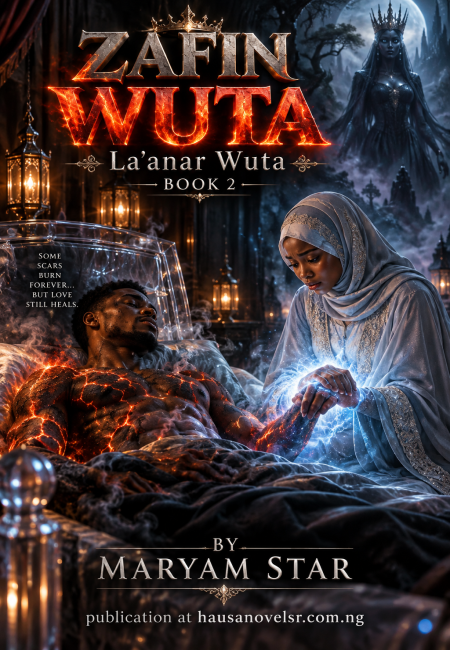
ZAFIN WUTABy Maryam Star
Introduction
Some wounds are too deep for medicine to heal, some acts of cruelty are too terrible for the heart to endure, and some destinies are sealed by decisions made without the consent of those who must live with the consequences. In Zafin Wuta, suffering takes on a terrifying new meaning as a young woman finds herself bound to a man whose body has become a battlefield of unimaginable torment. What begins as an act of desperation soon becomes a journey into supernatural mysteries, unwanted marriage, painful sacrifice, and a love that may be powerful enough to change two lives forever. But when the flames of suffering begin to reveal secrets hidden beneath the surface, one question remains: can a heart survive the very destiny it was never allowed to choose?
Summary
The story of Zafin Wuta opens with a horrifying sight that pushes the boundaries of human endurance. Fauzan lies helpless on a glass bed, his body ravaged by severe burns, his skin destroyed, and his suffering so intense that merely looking at him is enough to leave anyone shaken. Yet the most disturbing part of his condition is not the physical damage alone. An unnatural fire seems to consume him from within, accompanied by a terrifying supernatural presence that appears to feed on his flesh and breathe flames into his body. For those witnessing his condition, the experience is beyond ordinary comprehension. For the young woman who suddenly finds herself at the centre of this mystery, it is the beginning of an ordeal that will test her courage, faith, and understanding of the unseen world.
Amid this nightmare, Mubarakha Muhammad Ibrahim discovers that she possesses an extraordinary ability. Whenever she touches Fauzan, a strange coldness spreads through the room, while the destructive heat tormenting him begins to subside. The black smoke rising from his body disappears, and for brief moments, his suffering gives way to a peace he has desperately needed. Her presence seems to offer relief where other attempts have failed, although the supernatural forces surrounding his condition remain dangerous and unpredictable. Even in her fear, Mubarakha cannot bring herself to abandon a man whose pain is almost impossible to imagine. Her compassion becomes her greatest strength, drawing her into a mysterious connection with Fauzan that neither of them fully understands.
Beyond the walls of Fauzan's room, another battle unfolds in the realm of supernatural beings. Queen Zubudiyya, the daughter of the King of the Water Kingdom, pursues the injured black jinn Zuka through a dark forest. Her pursuit ends in a brutal punishment that sends a chilling message about the consequences of crossing powerful supernatural authorities. As Zuka suffers in the terrifying waters of judgment, he makes a bitter vow against two individuals. The identity and full significance of those people remain shrouded in uncertainty, creating an ominous suggestion that the conflict may not be over. The supernatural world is clearly governed by its own laws, rivalries, and punishments, and the consequences of its disputes may reach far beyond the realm in which they began.
Meanwhile, the human world introduces another form of cruelty. Abba returns home carrying a large bag filled with money, overwhelmed by the sudden wealth and opportunities that have entered his life. His excitement soon turns into an unsettling display of greed and entitlement. When Fauzan's father, Alhaji Abdallah, popularly known as Pahpah, approaches him with a marriage proposal, the circumstances surrounding the request expose the painful vulnerability of a young woman whose future is being decided by others. Pahpah wants his son to marry Mubarakha, the very young woman expected to nurse Fauzan through his suffering. Believing that marriage may be necessary to protect boundaries and support his son's recovery, he offers an enormous bride price and insists that the union take place quickly. Abba eagerly agrees, accepting a marriage arrangement worth millions of naira without giving his daughter a meaningful opportunity to decide her own future. Before the day can unfold as an ordinary family occasion, Mubarakha becomes a bride through a decision in which her wishes have barely mattered.
The emotional consequences of this arrangement become even more complicated when Mubarakha begins caring for her new husband. Fauzan, who has endured relentless pain and the horrifying destruction of his body, experiences an unfamiliar sense of relief whenever she comes near him. Their first interactions are filled with fear, discomfort, and unspoken questions, yet Mubarakha continues to assist him despite the physical and emotional strain. She cleans his wounds, applies medicine, prepares warm tea, and struggles to overcome the revulsion and terror caused by the severity of his condition. Her determination is not born from an easy affection but from compassion, religious devotion, and the difficult circumstances that have placed her in this position. As Fauzan begins to experience moments of peace in her presence, their forced union raises the possibility of an unexpected emotional bond. However, with supernatural enemies still lurking in the background and the wounds of family betrayal remaining fresh, their journey toward healing promises to be anything but simple.
Description: Genre and Setting
Zafin Wuta is a supernatural Hausa romantic drama that blends fantasy, dark spiritual conflict, family betrayal, emotional suffering, and the gradual possibility of love. Its narrative moves between the familiar realities of family life in Nigeria and an eerie supernatural realm inhabited by powerful jinn, royal figures, and forces capable of inflicting extraordinary punishment. The contrast between these settings gives the story its distinctive atmosphere. Ordinary human decisions, particularly those involving wealth, marriage, and family loyalty, carry consequences that intersect with a world of mysterious powers and unexplained suffering.
The human storyline unfolds partly in Lagos, where wealth, social standing, and family relationships influence the characters' decisions. Inside Fauzan's home, the atmosphere is dominated by pain, fear, and the desperate search for a cure. In contrast, the dark forest and the supernatural kingdom introduce a harsher environment where power is enforced through fear and punishment. These different settings create a story in which physical suffering, spiritual mystery, and emotional conflict continually overlap.
Core Themes
Sacrifice and Compassion
Mubarakha's willingness to care for Fauzan despite his frightening condition is one of the story's strongest emotional elements. Her actions demonstrate how compassion can endure even when fear, exhaustion, and personal discomfort threaten to overwhelm it. Through her character, the narrative explores the difference between simply feeling pity for someone and accepting the difficult responsibility of helping them.
Forced Marriage and Personal Choice
Mubarakha's marriage exposes the painful consequences of allowing financial interests and parental authority to overshadow an individual's wishes. Abba's willingness to accept a substantial bride price without adequately considering his daughter's feelings raises difficult questions about parental responsibility, dignity, and the right to choose a life partner. The marriage becomes more than a family arrangement. It is a turning point that places Mubarakha in a life she did not freely choose.
Suffering, Resilience, and the Search for Healing
Fauzan's condition represents suffering at its most extreme, while Mubarakha's persistence reflects the strength required to confront circumstances that appear unbearable. Their experiences explore the physical and emotional dimensions of pain, as well as the possibility that healing may come through unexpected connections. The story also leaves room for uncertainty, since temporary relief does not necessarily mean that the underlying danger has disappeared.
Supernatural Power and Consequences
The conflict involving Queen Zubudiyya and Zuka introduces a world where supernatural authority carries frightening consequences. Punishment, vengeance, and the mysterious vow made by Zuka suggest that actions within this realm can create dangers that extend beyond the immediate conflict. The supernatural elements deepen the suspense by making the characters' struggles part of a much larger and more unpredictable battle.
Love Beyond Appearance
Fauzan's physical condition challenges the conventional expectations often associated with romance. His suffering makes him vulnerable, while Mubarakha's presence offers comfort that cannot be explained by physical attraction alone. Their developing connection raises questions about whether genuine affection can grow from compassion, shared hardship, and emotional understanding, even when a relationship begins under painful circumstances.
Greed, Betrayal, and Family Responsibility
Abba's behaviour demonstrates how the pursuit of wealth can distort parental judgment and damage the trust that should exist within a family. His decision to accept money in exchange for his daughter's marriage contrasts sharply with Mama's distress and concern. Through these opposing reactions, the story examines the consequences of greed and the emotional wounds created when a parent treats a child's future as a transaction.
Key Characters
Mubarakha Muhammad Ibrahim
Mubarakha is the young woman at the centre of the human drama. Despite being forced into a marriage she did not choose, she demonstrates remarkable patience, courage, and compassion while caring for Fauzan. Her apparent ability to soothe his supernatural burns makes her role especially mysterious. She is both a victim of decisions made by others and a potentially crucial figure in the struggle against the forces tormenting her husband.
Muhammad Fauzan Abdallah
Fauzan is the severely injured son of Alhaji Abdallah. His body has been devastated by a terrifying condition described as a fire that consumes him from within. Years of ordinary comfort seem distant from his present reality, and his suffering leaves him dependent on others for even the simplest acts of care. Yet Mubarakha's presence brings him relief and awakens unfamiliar feelings, suggesting that his connection with her may be central to his recovery and future.
Alhaji Abdallah, Known as Pahpah
Pahpah is Fauzan's father and a wealthy man desperate to find a solution to his son's condition. His decision to arrange Fauzan's marriage to Mubarakha reflects his determination to secure his son's care and improve his chances of recovery. Although his intentions appear rooted in desperation and concern, the haste of the arrangement raises questions about the rights and emotional needs of the young woman whose life is being redirected.
Abba
Abba is Mubarakha's father, whose sudden access to wealth exposes his greed and disregard for his daughter's personal wishes. His willingness to accept a substantial bride price and consent to an immediate marriage makes him a major source of the emotional conflict. His actions demonstrate how financial desperation and selfish ambition can undermine the responsibilities of parenthood.
Mama
Mama represents a contrasting response to Mubarakha's predicament. Her distress over the marriage and her concern for her daughter reveal the emotional cost of Abba's decisions. Although she has limited control over the arrangement, her grief and prayers suggest a mother's desire to protect her child when circumstances place that child beyond her immediate reach.
Queen Zubudiyya
Queen Zubudiyya, the daughter of the King of the Water Kingdom, is a formidable supernatural figure who pursues and punishes Zuka. Her authority and merciless response to wrongdoing establish her as a powerful presence in the unseen realm. Her actions also contribute to the wider conflict that threatens to extend beyond the supernatural world.
Zuka
Zuka is a black jinn who suffers a severe defeat at the hands of Queen Zubudiyya. His punishment culminates in a vow against two people, hinting at future vengeance. Although his precise plans remain unclear in the supplied chapters, his bitterness establishes the possibility of another dangerous conflict.
Hashim
Hashim plays an important role in the marriage arrangement by accompanying Abba and helping communicate the circumstances surrounding Mubarakha's situation. He also acts as her representative during the hurried marriage ceremony. His involvement helps move the plot from Fauzan's personal suffering into the life-changing decision that binds the two central characters together.
Analytics and Insight
Narrative Structure and Pacing
The novel establishes its suspense through a sequence of escalating developments. It begins with Fauzan's horrifying condition, introduces Mubarakha's unusual ability to relieve his suffering, shifts into a supernatural confrontation, and then reveals a family decision that changes the course of her life. This movement between physical horror, supernatural danger, and domestic conflict creates several interconnected sources of tension. Rather than relying on one central mystery, the narrative builds anticipation through multiple unresolved questions.
Character Psychology and Emotional Conflict
The strongest psychological contrast lies between Mubarakha's compassion and Abba's self-interest. While she accepts the difficult task of caring for someone in extreme pain, her father appears willing to benefit financially from a decision that deeply affects her future. Fauzan's vulnerability adds another dimension to this conflict. He is not simply a wealthy man's son who needs a caregiver. He is a suffering individual whose dependence on Mubarakha may gradually transform their relationship, even though neither initially enters the marriage under ordinary romantic circumstances.
Supernatural Symbolism
The fire in Fauzan's body serves as a powerful symbol of relentless suffering. It represents a destructive force that ordinary comfort cannot overcome, while the unusual coldness surrounding Mubarakha suggests a possible counterforce. Their opposing experiences of heat and cold create a recurring image of conflict and balance. Meanwhile, Zuka's punishment and vow introduce the theme of vengeance, suggesting that suffering may generate further suffering if the cycle is not broken.
Romantic Development
The romance develops through care rather than immediate attraction. Mubarakha first encounters Fauzan as a man whose condition frightens and overwhelms her, yet she chooses to assist him. Fauzan, in turn, experiences relief and growing emotional awareness in her presence. These moments provide the foundation for a relationship that may evolve beyond its forced beginnings. Whether that connection can become genuine love, however, depends on more than physical recovery. Trust, respect, and the possibility of personal choice will be equally important.
Audience Appeal
Zafin Wuta is likely to appeal to readers who enjoy Hausa novels combining supernatural fantasy with romance and family drama. Its disturbing imagery creates an immediate emotional impact, while the forced marriage introduces a familiar social conflict with serious personal consequences. The mysterious nature of Fauzan's illness and the threat of Zuka's revenge also give readers reasons to continue beyond the opening chapters. The story brings together suspense, spiritual intrigue, sacrifice, and emotional vulnerability in a narrative designed to keep its central questions unresolved.
What Makes Zafin Wuta Compelling?
The novel's central strength is the way it connects extraordinary supernatural suffering with recognisable human weaknesses. Fauzan's condition may be terrifyingly unusual, but the pain caused by greed, the loss of personal freedom, and the longing for genuine care are deeply human experiences. Mubarakha's situation is particularly compelling because her kindness does not erase the injustice she has suffered. She can show compassion toward Fauzan while still being a young woman whose own future has been decided for her.
This tension gives the developing romance greater complexity. Their relationship begins with necessity, vulnerability, and a marriage arranged under pressure. If affection eventually grows between them, it must contend with the circumstances that brought them together. At the same time, the supernatural storyline suggests that their personal struggles may be connected to a wider danger that neither can face alone.
A Thought-Provoking Quote
“Sometimes, the person who brings relief to another's suffering is carrying a pain of their own that the world has refused to see.”
Editorial note: This is an original thematic quote inspired by the supplied chapters, not a verbatim quotation from the novel.
Final Insight
Zafin Wuta is a story about suffering that reaches beyond the body, cruelty that can exist within families, and compassion that emerges in the most frightening circumstances. Through Mubarakha and Fauzan, the novel explores the possibility of connection when life has stripped away comfort, certainty, and personal control. Through Abba, Mama, Queen Zubudiyya, and Zuka, it expands that conflict into questions of greed, justice, supernatural power, and revenge.
As Fauzan struggles against the fire consuming him and Mubarakha adjusts to a marriage she never freely chose, their future remains uncertain. Will her mysterious ability be enough to help him escape his torment? What does Zuka's vow mean for the people whose lives may be caught in his revenge? And can a relationship born from desperation become a bond built on genuine understanding and affection?
The answers lie beyond the opening chapters. One thing is clear: in Zafin Wuta, the greatest danger may not be the fire that burns the body, but the choices, secrets, and desires that can leave wounds far more difficult to heal.


